
U.S. Naval War College President Meets with Japan Self-Defense Force Education Leaders, Students
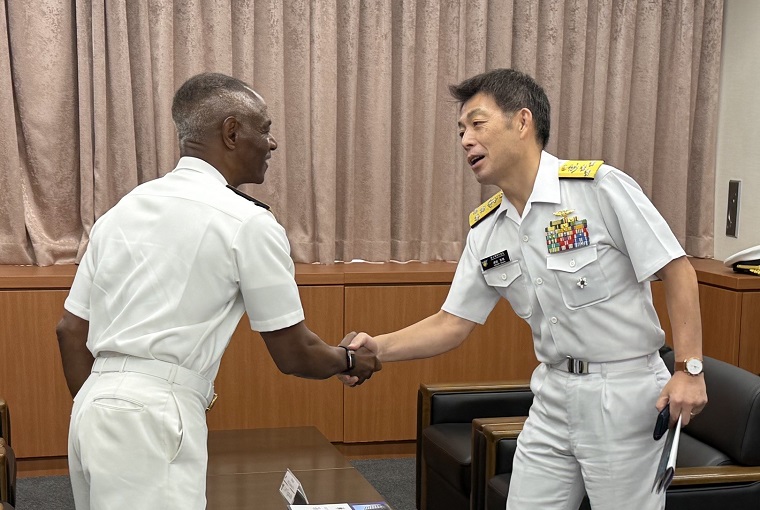
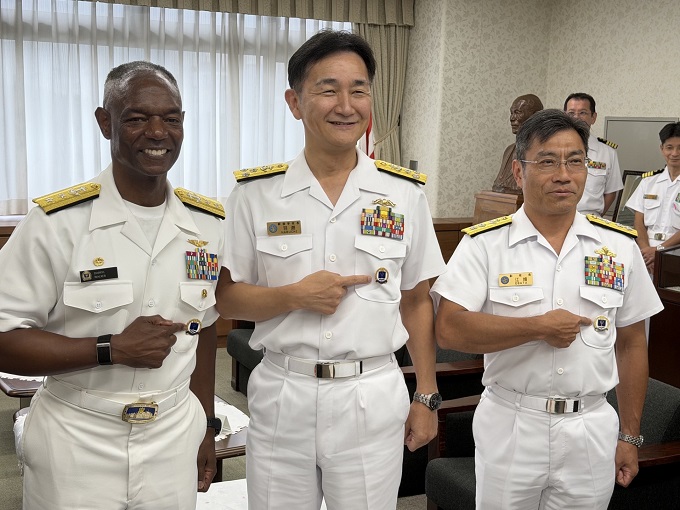
U.S. Naval War College (NWC) President Rear Adm. Darryl Walker met with Vice Adm. Tetsuya Takada, Commandant of the Japan Joint Staff College, and Vice Adm. Hiroyuki Habuchi, President of the Japan Maritime Self-Defense Force (JMSDF) Command & Staff College, and their staffs in Tokyo during a series of professional education engagements on Sept. 8.
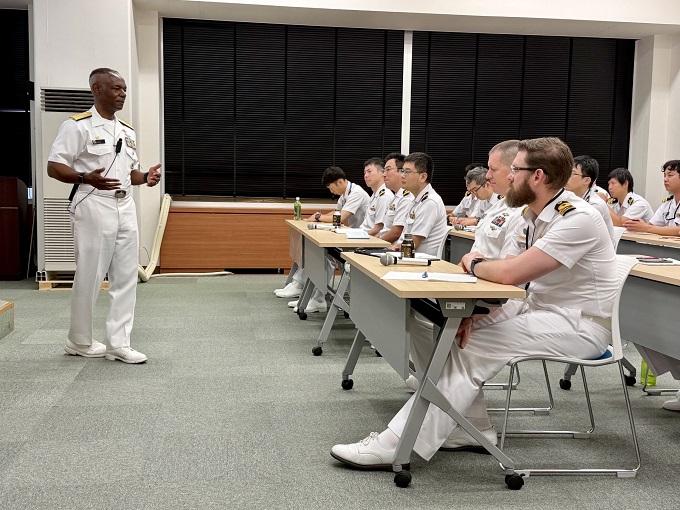 While at the JMSDF Command & Staff College, Walker delivered a lecture and fielded questions from approximately 50 Japanese and international students enrolled at the institution.
“It was a true pleasure to visit with Vice Adm. Takada and Vice Adm. Habuchi to discuss best practices in professional military education, and then to engage with the talented military officers enrolled in the Japan Maritime Self-Defense Force Command & Staff College,” Walker said. “It was informative and inspiring to hear not only from the decorated JMSDF leaders who oversee these esteemed institutions, but also from the students, who are clearly gaining a valuable educational experience. I was proud to be able to share the U.S. Naval War College perspective and continue building the relationship between our people and our military institutions that will keep our alliance ironclad long into the future.”
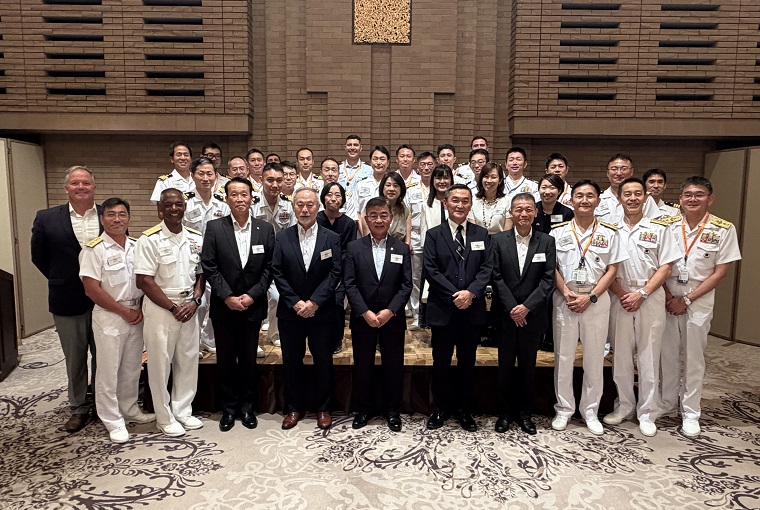
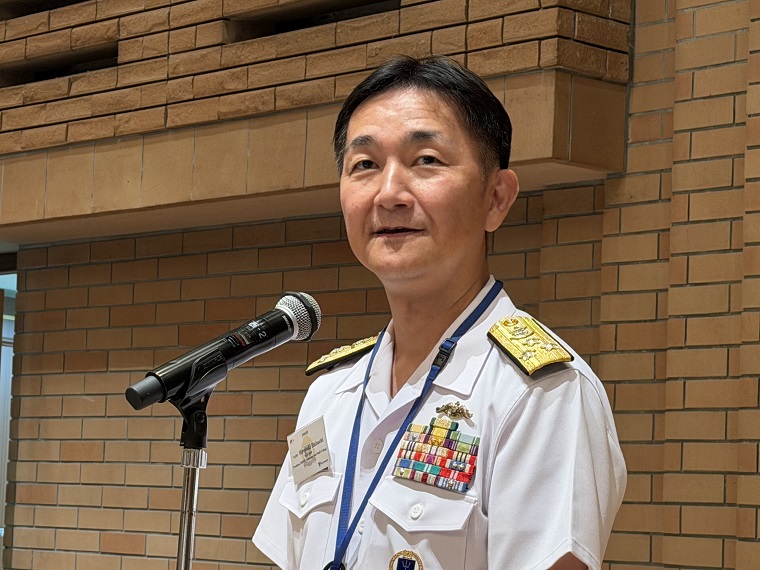 Walker’s Command & Staff College visit came about two months after he addressed nearly 200 JMSDF officer trainees aboard the training ship JS Kashima (TV-3508) during America’s landmark International Naval Review (INR) 250 event in the Port of New York and New Jersey, and was a central component of a larger Tokyo schedule that also included an engagement with nearly 50 U.S. and Japanese NWC alumni living or working in Japan.
“It was moving to hear from U.S. Naval War College alumni - from both the U.S. military and Japan Maritime Self-Defense Force - about the value of our institution to their progression as military leaders and to the mission readiness of their forces as a result,” Walker said. “We take pride in the fact that the war college has a persistent and tangible presence wherever U.S. and allied forces can be found.”
Each year, the college welcomes between 100 and 150 foreign officers to the U.S. from around the world to study strategy, warfare, decision making, and operational art. Since creating a program for international officers in 1956, the NWC has more than 5,500 international alumni from 145 countries worldwide.
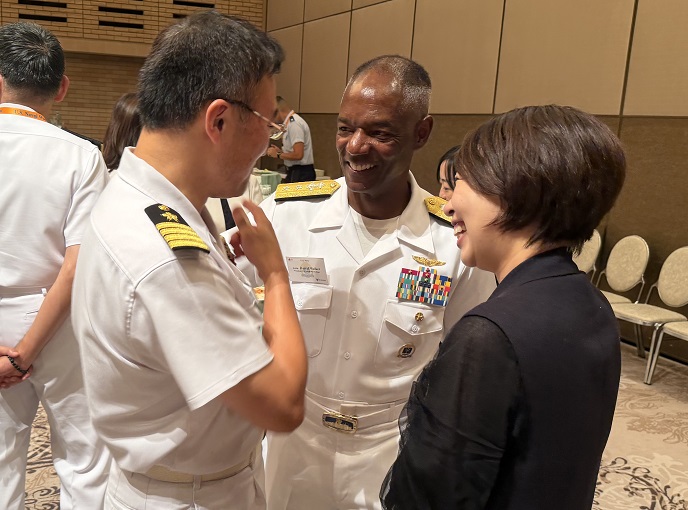 There have been approximately 140 NWC graduates from Japan over the past 70 years, including 80 who reached a flag officer rank – such as admiral or general – and 16 who became chief of staff of the JMSDF.
NWC International Programs Department offerings include the 11-month in-residence Naval Command College and Naval Staff College programs, for senior-level and mid-career international officers, respectively, as well as the concentrated five-month Maritime Security & Governance Course and the 11-week International Maritime Staff Operators Course.
Habuchi is a 2014 graduate of the NWC’s Naval Command College.
While in Japan, Walker also met one-on-one with U.S. Navy commanders of forward-deployed forces in Yokosuka to discuss ongoing U.S. Naval War College support for their forces, deliver some of the latest NWC research focused on the region and gather input on curriculum.
 “Hundreds of outstanding military officers - from the U.S., Japan and so many other allied and partner nations - are at our Rhode Island campus right now benefiting from courses on doctrine, strategy and emerging technologies, preparing to return to the war rooms and front lines as even more capable leaders,” said Walker. “That said, hundreds more are out in the fleet working with our experts to sharpen their skills and more accurately understand the battle spaces around them. From the expert warfighters and trainers in our College of Maritime Operational Warfare, to our war gamers and researchers in our Center for Naval Warfare Studies, to the practitioners and planners in our Maritime Advanced Warfighting School, personnel from the U.S. Naval War College can be found directly supporting operational forces all over the world, at any and all times.”
Walker’s robust Japan schedule came on the heels of his visit to the College of Maritime Operational Warfare’s Combined Force Maritime Component Commander (CFMCC) flag course in Hawaii, which attracted participants from the U.S. military and 19 ally and partner nations.
Established in 1884, NWC informs today’s decision-makers and educates tomorrow’s leaders by providing educational experiences and learning opportunities that develop their ability to hedge aggressively, innovate continuously, fight distributively, delegate confidently, and command with clarity within complex battlespaces.
About this News Article
Article Information
September 10, 2026
Most Recent
News, Media, & Events
Sharpening the Mind for the Fight: New Training Boosts Sailors' Resilience and Focus
Aug. 28, 2026
News Publication
Prof. Blankshain Takes Over as Chair of National Security Affairs Department
Sep. 01, 2026
News Publication
Issues in National Security: "Space & National Security"
Oct. 27, 2026
4:30 PM
Spruance Auditorium, U.S. Naval War College, 686 Cushing Road, Newport, RI 02841
Moscow’s Mercenaries: The Rise and Fall of the Wagner Group
Jun. 01, 2026
Columbia University Press
Article Publication