
President’s Spotlight: Assoc. Prof. Chris Hauver and CLE’s Curriculum Teaching & Assessment Committee
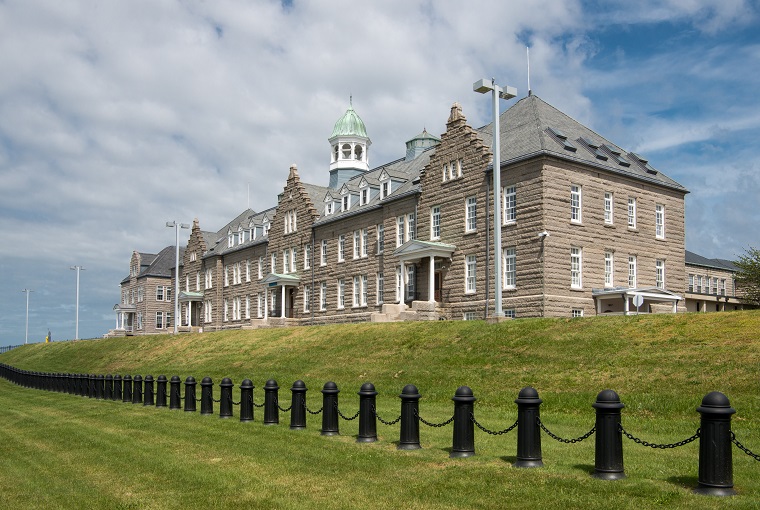
Starting now and continuing at least through the end of my time here at the U.S. Naval War College, I’d like to regularly highlight someone or something that’s caught my attention over the previous couple of weeks. It might be a person – student, faculty or staff – who deserves recognition, or it might be an occasion I want to draw more attention to. These short ‘President’s Spotlight’ pieces will be posted about once every two weeks.
One of the most important things we do here at the U.S. Naval War College is evolve. We must continually evaluate and update our processes, procedures and curriculum to ensure we’re doing the best we can to prepare the next wave of warfighters to lead forces to victory.
Sometimes those are small, daily changes we can make to become more efficient in what we do. But sometimes we can identify a need for a more significant change that we know will take a lot of time and a lot of work, and we cannot be afraid to roll up our sleeves and do it.
Assoc. Prof. Chris Hauver of our College of Leadership and Ethics (CLE), along with his team, rolled up his sleeves to split our longstanding Leadership in the Profession of Arms (LPA) core course into two new and uniquely challenging core courses that will elevate the cognitive performance of our military leaders and mentally train them for the modern – and future – battlefield.
Chris was the perfect man for this job.
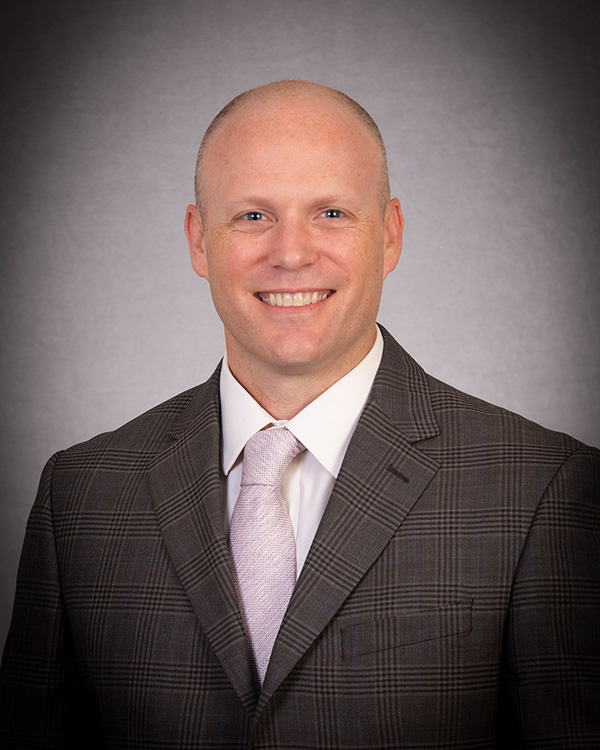 Then-Lt. Col. Chris Hauver, U.S. Air Force, was in the very first pilot LPA course in 2018 as a student here at the U.S. Naval War College. He returned as a military faculty member in 2021 and, after retiring from uniformed service as a colonel, was hired as an associate professor to serve as director of LPA a little more than a year ago.
Chris understood our Leadership in the Profession of Arms curriculum from every angle, deeply understood the value of that course, knew firsthand how it benefited our service members returning to positions of authority across the force and – most importantly – recognized how it could become even better.
Until now, that LPA course had been our landmark – but standalone – core leadership course for both our junior-level and senior-level students.
On Nov. 1, 2024, with Chris at the helm, CLE launched what would become a nearly two-year renovation of LPA, resulting in what is now, starting with this academic year, two new courses that represent a comprehensive redesign of the learning experience for our enrolled warfighters: Leader Development in the Profession of Arms (LDPA) for our junior-level students and Stewardship and the Profession of Arms (SPA) for our senior-level students.
Our new LDPA course works with students through the operational level of war, as expected of military leaders at about mid-career assignments, and our SPA course focuses on the strategic level of war, preparing personnel for the jobs they’re expected to take as senior and, hopefully, flag officers.
Informed by the latest science in metacognition and andragogy – how adult learners process information – Chris and his team built courses that force students to spend weeks grappling with moral dilemma projects at those different levels of engagement, building on their own experiences as battle-tested military leaders and providing them the framework through which to navigate competing values and uncertainty.
As Chris would say, these new courses do not prepare students for every eventuality – they prepare them for any eventuality. The leaders who emerge from these courses do not leave with a checklist to solve complicated problems, but rather the cognitive scaffolding to think through scenarios where there is no script.
So how did we get here?
Chris and CLE’s Curriculum Teaching and Assessment Committee applied the backward design methodology when building these courses. They started by identifying the intended end result, and developed curricula that would achieve that mission.
They worked through a needs assessment of the student cohorts, looking at the junior and senior courses distinctly, considering their respective experience levels and institutional expectations. They combed through curricula from other war colleges, Navy leader development framework and a number of other sources.
They used those needs assessments to develop course learning objectives (CLO) over six months, with committee members taking on additional roles as team leads to focus on each individual objective, pulling together readings and case studies that could be directly tied to these important benchmarks.
As examples, those CLOs include crucial competencies such as team-building and larger organizational leadership, among other very well-researched and well-defined learning objectives.
The Curriculum Teaching and Assessment Committee consisted of a number of valued colleagues who have since retired or left the war college for other opportunities over the last few years, but a number are still here helping launch these inspiring new courses, including Dr. Olenda Johnson, Dr. Lisa Kerr, U.S. Navy Capt. Paul Tremblay and U.S. Air Force Lt. Col. (or colonel-select) Phil Summers.
Julia Gagnon, as CLE’s Education Technician, supported the effort with the heavy administrative load, creating the courses in our learning management software, assembling the student rosters, and working with the library on copyright clearances, among other essential tasks.
I want to thank them all, present or not, for their tireless work supporting this massive lift.
With CLOs defined, Chris and his team developed the assessment piece – putting together a system to evaluate whether, and ensure, the courses continue to meet those goals. And only then, after they fully, painstakingly fleshed out how they wanted our students to emerge from these courses, firmly backed by science and aligned under the priorities of our Department of War, did they fill out the course content.
As our understanding of andragogy and the evolution of warfare has changed over time, so has our core leadership curriculum. The new courses’ immersive moral dilemma projects replace the legacy LPA’s weekly standalone case studies, and our readings and assignments have been almost completely separated to address operational or strategic levels of conflict, as necessary.
I’m truly inspired by the passion Chris and his team brought to this incredibly difficult project. It’s a passion that I know everyone on our faculty shares and brings to their jobs here every single day. We all want to prepare our students, these next generations of U.S. and international military leaders, to become the best they can be, and to lead tomorrow’s forces to victory.
That takes constant re-evaluation and sometimes grueling work to make sure we’re giving those students our best every academic year and, frankly, every day.
Thank you to Chris and the CLE’s Curriculum Teaching and Assessment Committee for being an example of dedication for us all, and for making the U.S. Naval War College better.
– Rear Adm. Darryl Walker,
President, U.S. Naval War College
About this News Article
Article Information
August 17, 2026
Most Recent
News, Media, & Events
Introducing the New U.S. Naval War College Provost, Retired U.S. Navy Capt. Michael O’Hara, Ph.D.
Aug. 03, 2026
News Publication
Acting Secretary of the Navy Launches New Academic Year at the U.S. Naval War College
Aug. 04, 2026
News Publication
Strategy & Policy Course Ends
Feb. 26, 2027
U.S. Naval War College, 686 Cushing Rd, Newport, RI 02841
China’s Far-seas Navy and the Logic of Global Presence
Jun. 05, 2026
Survival (London)
Article Publication