
U.S. Naval Forces Southern Command, Chilean Navy leaders visit U.S. Naval War College
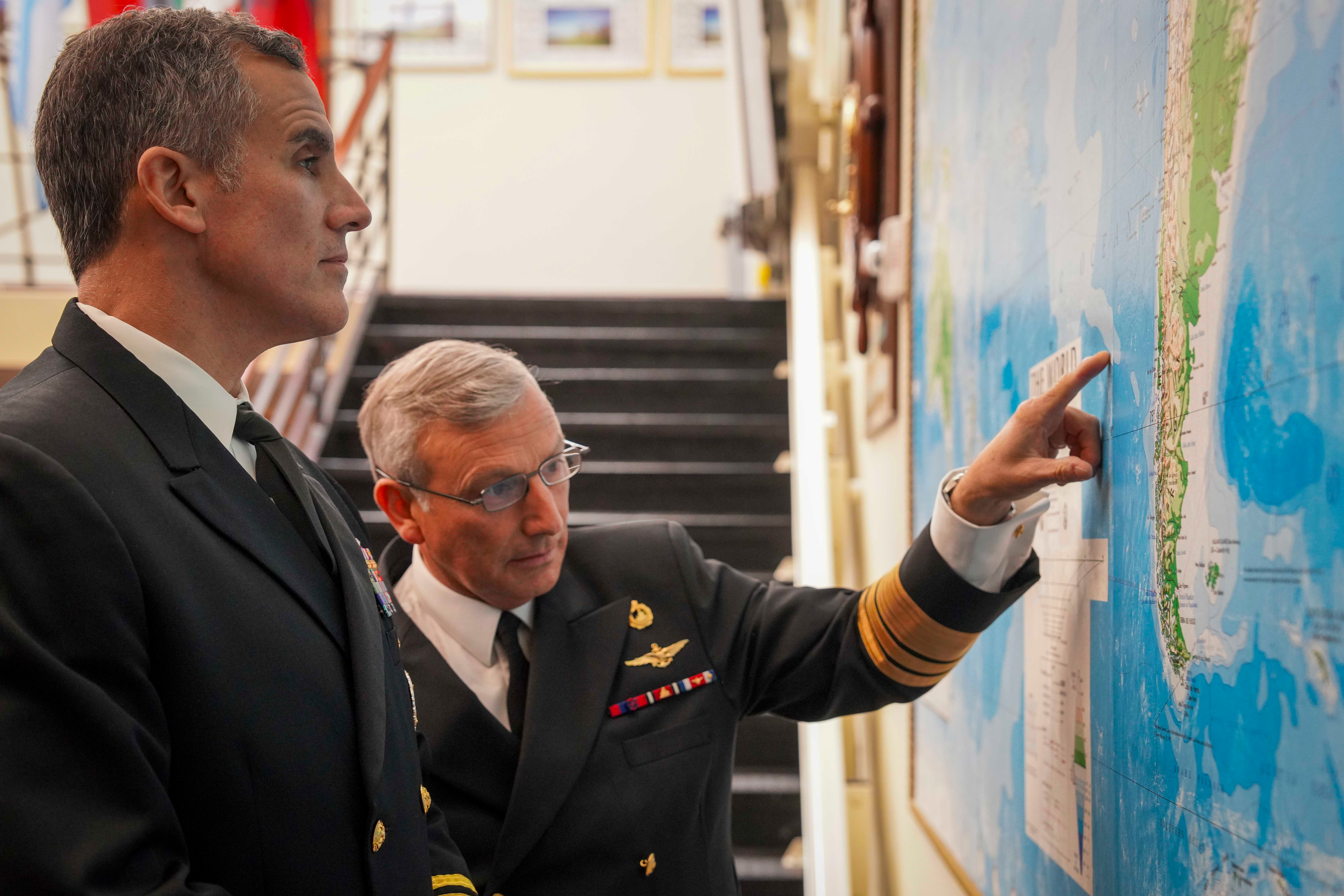
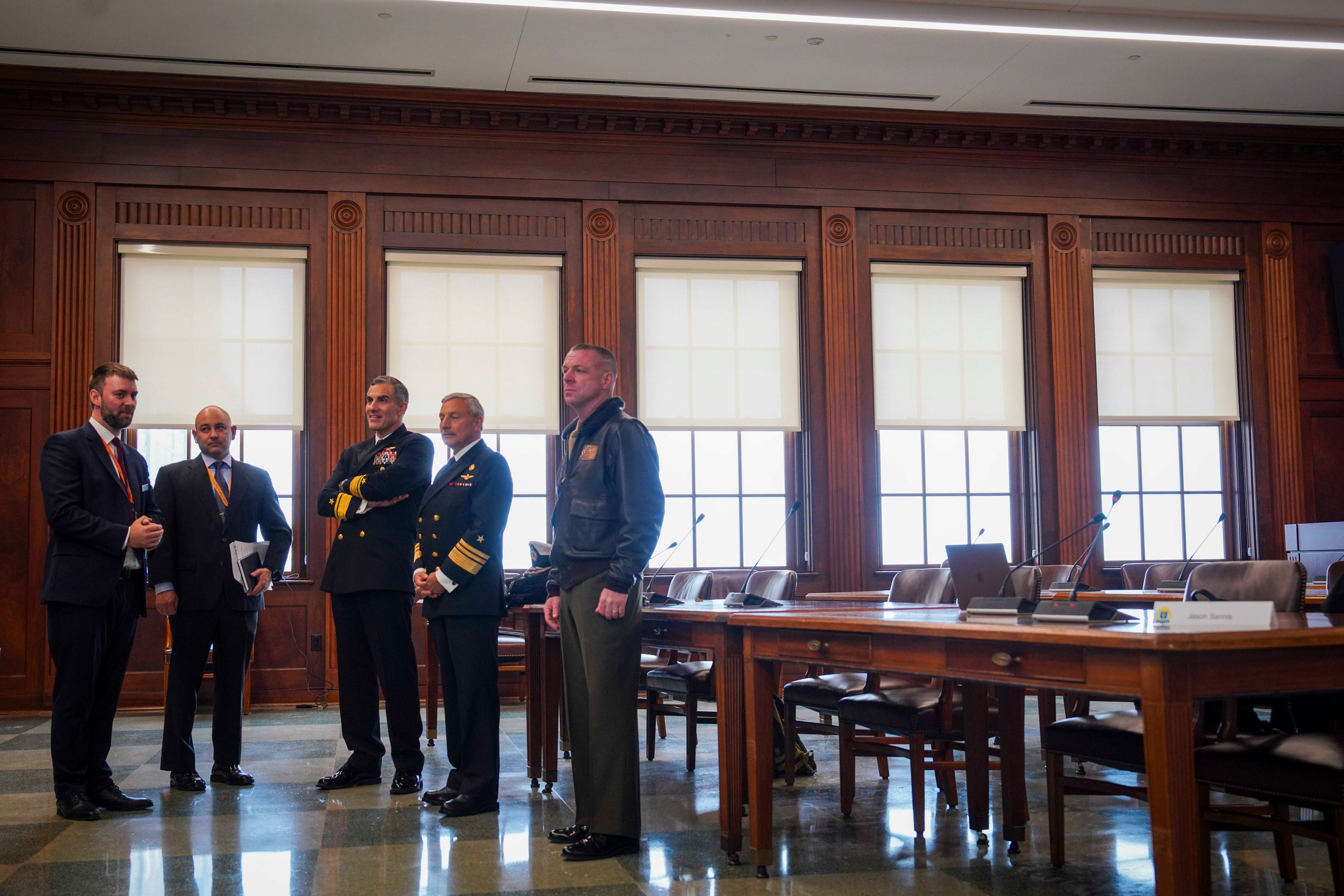
NEWPORT, R.I. – Rear Adm. Carlos Sardiello, commander of U.S. Naval Forces Southern Command and U.S. 4th Fleet, and Vice Adm. Raul Zamorano, chief of staff of the Chilean Navy, visited the U.S. Naval War College (NWC) on April 13-14.
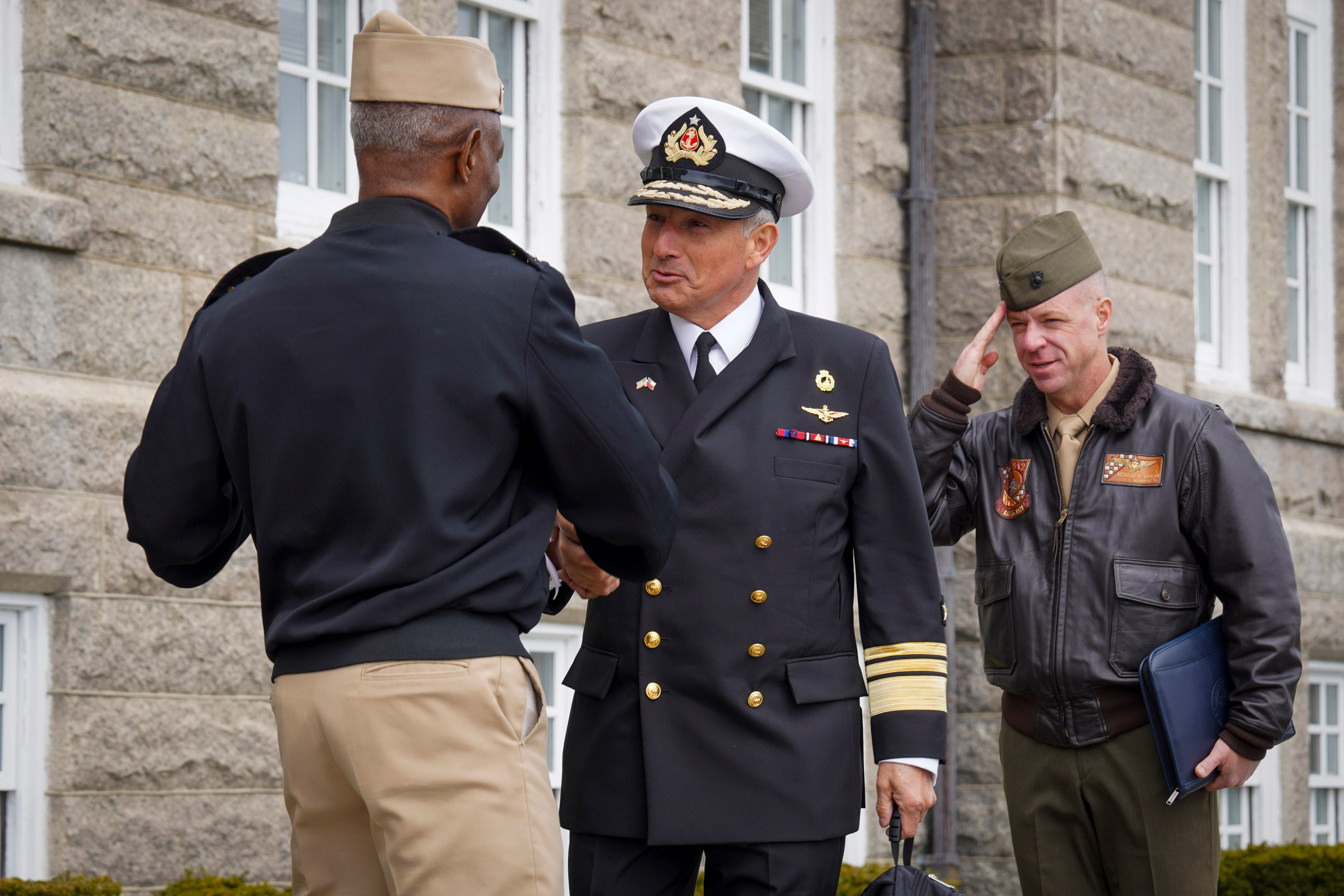
The navy leaders were in Newport, Rhode Island, with their staffs to conduct bilateral maritime talks, and while on-station met with Naval War College President Rear Adm. Darryl Walker, as well as Chilean military officers currently enrolled in the college.
“It was our pleasure to welcome Vice Adm. Zamorano and Rear Adm. Sardiello to the U.S. Naval War College during their bilateral Maritime Staff Talks here in Newport,” said Walker. “It's critical that our military leaders in the Western Hemisphere remain in close coordination as we address common challenges.
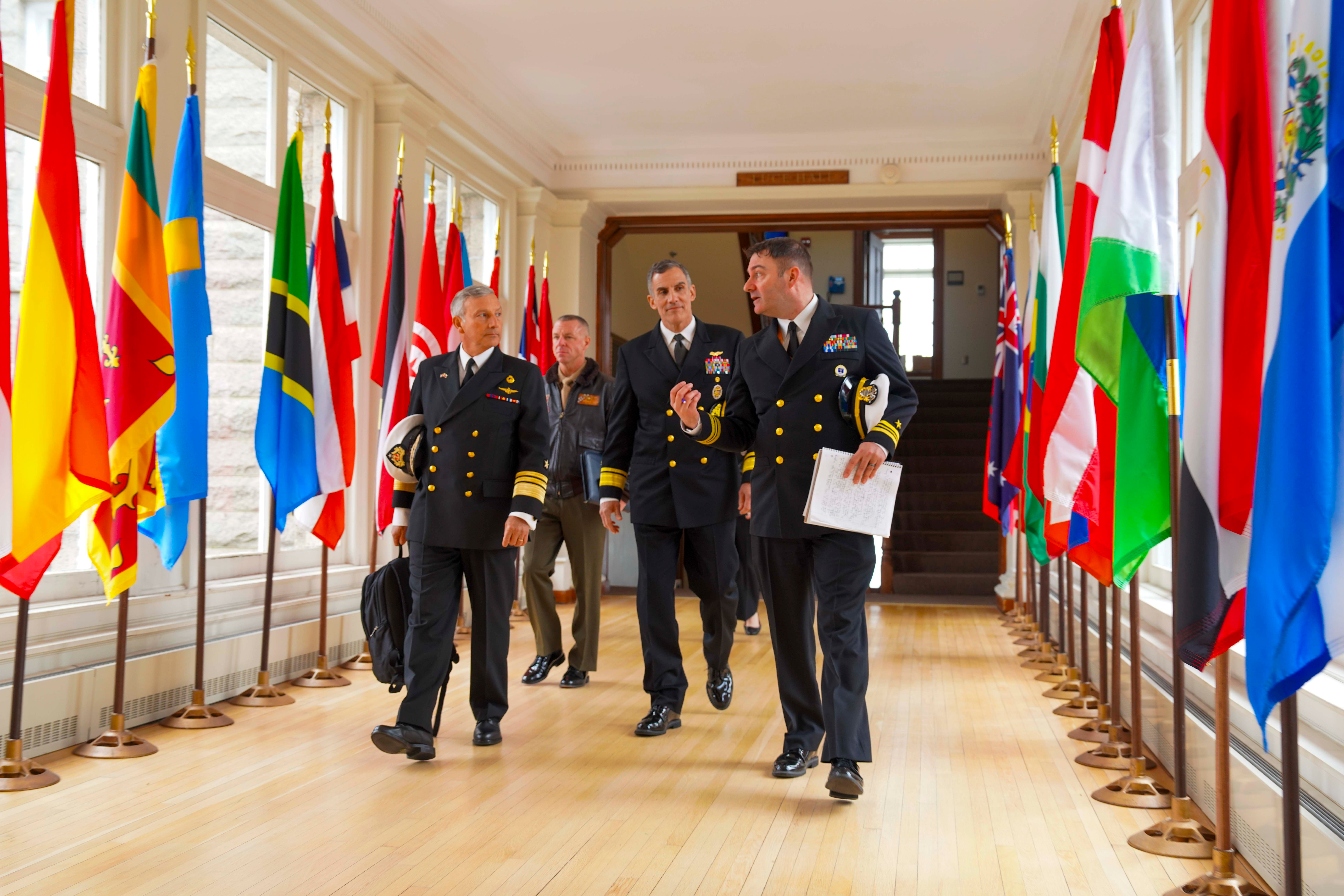
“We are proud to have played even a small part in these meaningful discussions between two experienced Navy leaders and their respective teams,” he continued. “Through our various senior leadership programs, the war college is training the next wave of senior U.S. military officers – as well as their international counterparts – to understand these important relationships and maintain them long into the future.”
Two Chilean Navy officers – Capt. Sergio Huidobro and Cmdr. Nicolas Boisier – are currently at the war college.
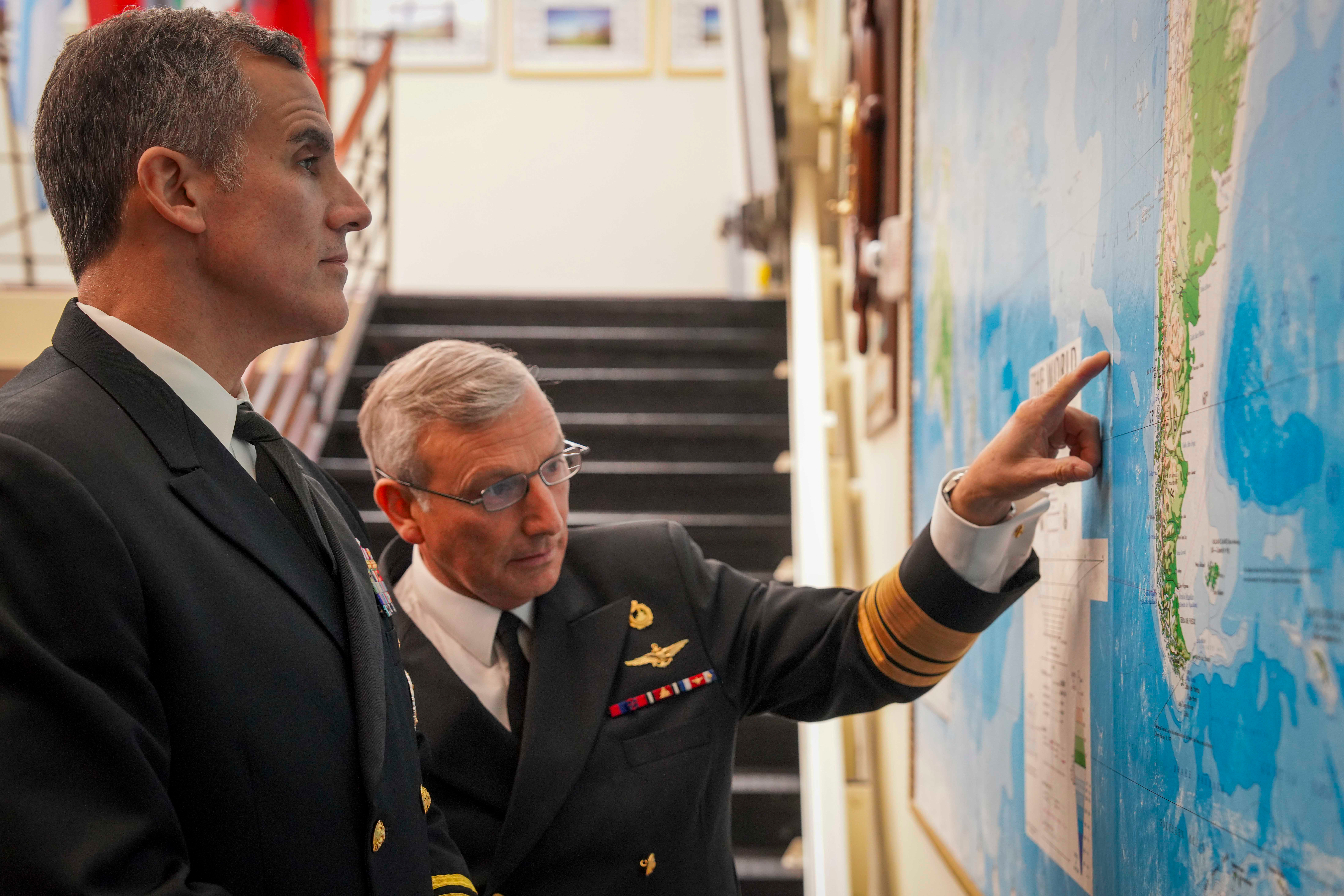
The NWC’s International Programs department’s eleven-month Naval Command College program is designed to prepare senior officers for the highest levels of command and is open to international naval officers in the grades of O-5 and O-6 – navy commanders and captains and their equivalents. Since its founding in 1956, more than 2,100 officers from 91 nations have completed the NCC program, with more than half reaching the rank of general or admiral in their home militaries.
Established in 1884, NWC informs today’s decision-makers and educates tomorrow’s leaders by providing educational experiences and learning opportunities that develop their ability to anticipate and prepare strategically for the future, strengthen the foundations of peace, and create a decisive warfighting advantage.
About this News Article
Article Information
April 15, 2026
Most Recent
News, Media, & Events
U.S. Naval War College Joins Polish Navy to Hold Regional Alumni Symposium in Gdynia
Apr. 02, 2026
News Publication
U.S., European Navy Leaders Discuss Joint Combined Interoperability, Critical Maritime Infrastructure and Evolution of Warfare at Naval War College Symposium in Poland
Apr. 03, 2026
News Publication
Issues in National Security: "Maritime Silk Road"
Apr. 14, 2026
4:30 PM
Spruance Auditorium, U.S. Naval War College, 686 Cushing Road, Newport, RI 02841
Floating Red Crosses: An Exploration into the Global Hospital Ship Ecosystem Using Open-Source Data
Apr. 11, 2026
Expeditions by MCUP
Article Publication