
U.S. Naval War College Cyber and Innovation Policy Institute Hosts ‘Cyber Seabed to Space’ Summer Workshop
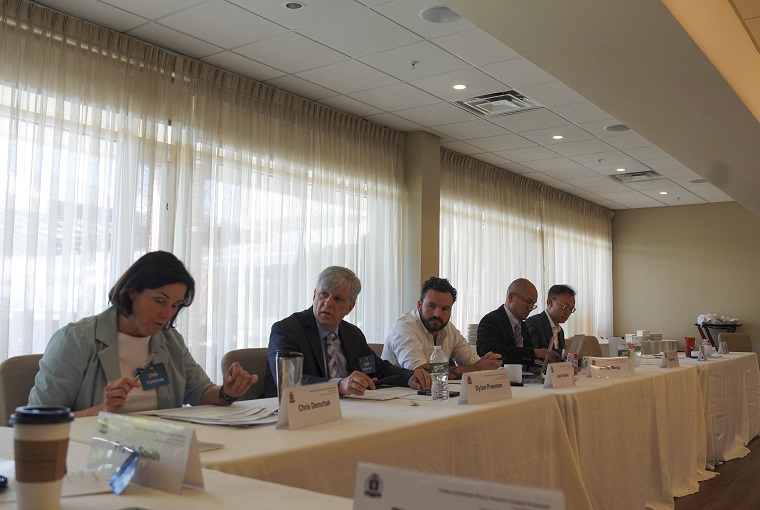
NEWPORT, RI — The U.S. Naval War College (NWC) hosted the fifth iteration of the Adm. James R. Hogg Cyber and Innovation Policy Institute’s (CIPI) Summer Workshop in Newport, Rhode Island, May 27-29.
The CIPI Summer Workshop series brings together academics, practitioners and government officials to discuss critical challenges and opportunities in military innovation. The topic of this year’s workshop was “Cyber Seabed to Space: Connectivity During Crisis and Conflict in the Pacific.” The goal was to wargame operational challenges and advance research aimed at securing digital infrastructure, from subsurface assets to satellites.
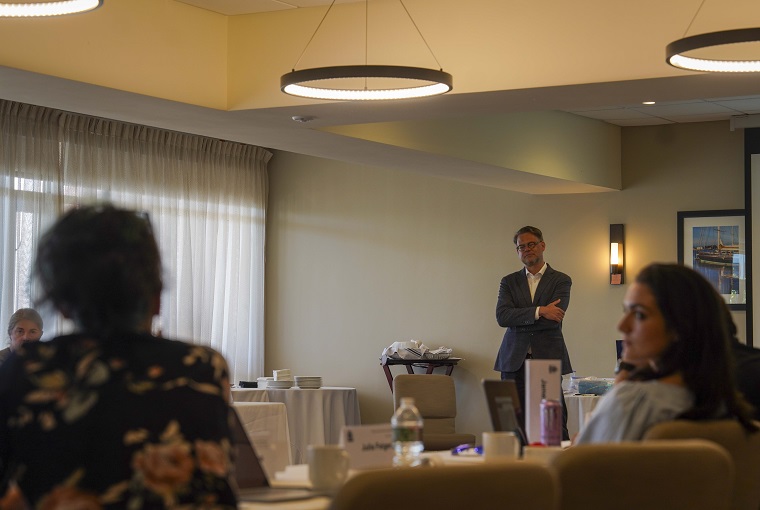 Speakers included keynote addresses by Professor Christian Bueger from the University of Copenhagen, Dr. Rebecca Connolly from the SpaceCyT Institute in Australia, and Professor David Manley, the Ministry of Defence Professor of Naval Architecture at University College London. The workshop also featured welcome remarks from NWC President Rear Adm. Darryl Walker.
“The CIPI team has once again pulled together some of the world’s brightest and most innovative minds to discuss the cybersecurity threats facing our military, our country and the world today,” Walker said. “Reflecting the full spectrum of digital infrastructure challenges we must address, our CIPI Summer Workshop considers the defense of everything from the fiberoptic cables stretching across the ocean floor to the vast network of satellites that keep our joint forces, allies and partners – and our economies – interconnected. This brilliant symposium lineup offers the experience and expertise to wargame in this unique and potentially vulnerable battle space, to ensure our forces have the insight they need to foresee risks and successfully protect our digital infrastructure.”
Workshop participants played the Digital Straits Wargame, designed by Professor Jay Vogt, Dr. Nina Kollars, and CIPI Gravely students. They also engaged in multiple panel discussions and lectures over the three-day event, tackling complex geopolitical and military situations ranging from Indo-Pacific contingencies to the current conflict in the Middle East.
CIPI Director Professor Frank Smith played a leading role throughout the workshop.
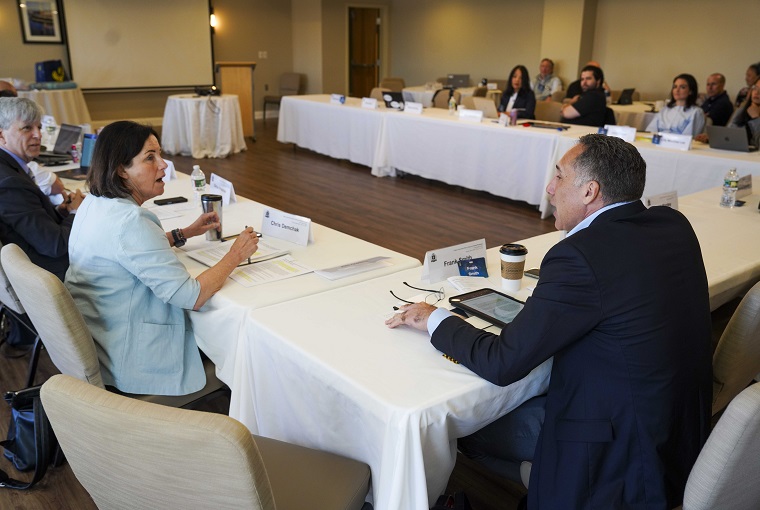 “Modern warfare depends on infrastructure that wasn't built for war,” Smith said. “From undersea cables to satellites in low Earth orbit, the U.S. military and our allies and partners depend on commercial technology. These dependencies create vulnerabilities that we must understand to prevail in crisis or conflict.”
With support from the Naval War College Foundation, the CIPI Summer Workshop series contributes directly to innovative education, research, and outreach at NWC. The event facilitates collaboration between students enrolled in the CIPI Gravely advanced research program and external subject matter experts, yielding policy-relevant research that is published in academic journals, policy outlets, and industry publications.
CIPI is the premier hub for cyber strategy and technology policy research, education, and outreach at NWC. Its areas of research range from cyber operations and artificial intelligence to robotic and autonomous systems. All of the institute’s work is interdisciplinary, combining military, civilian, government, commercial, social, technical, open-source, classified, scholarly, and policy expertise. Its faculty and students currently focus on three lines of effort: technological innovation and future warfare; cyber wargaming, organizations, and strategies; and the defense of critical infrastructure. CIPI is part of the Strategic and Operational Research Department in the Center for Naval Warfare Studies.
Established in 1884, NWC informs today’s decision-makers and educates tomorrow’s leaders by providing educational experiences and learning opportunities that develop their ability to hedge aggressively, innovate continuously, fight distributively, delegate confidently, and command with clarity within complex battlespaces.
About this News Article
Article Information
May 30, 2026
Most Recent
News, Media, & Events
Naval War College Students Present Research on Contested Logistics Policy, Industrial Competition and Preparing for Algorithmic War
May. 26, 2026
News Publication
U.S. Naval War College Honors 108 Students in International Programs Pinning Ceremony
Jun. 02, 2026
News Publication
2026 CIWAG Maritime Symposium: Gathering Storms & Shifting Tides
Jun. 22, 2026
7:00 AM
Wyndham Hotel, 240 Aquidneck Ave, Middletown, RI 02842
Restrain and Hedge: A New U.S. Nuclear Strategy for a Two-Peer World
May. 15, 2026
War on the Rocks
Article Publication